Phoenix · Since 1961
Concrete scanning in Phoenix: find it before you cut it.
Ground-penetrating radar locates rebar, conduit, and post-tension cables, marked on the concrete before the core drill or the saw ever touches the concrete.
Every slab and wall hides something: rebar, conduit, post-tension cables, water lines, and the occasional surprise. Cutting or coring blind into a live conduit or a tensioned cable is expensive at best and dangerous at worst. Ground-penetrating radar (GPR) scanning finds what’s in the concrete before the blade or the bit gets there, so the hole goes exactly where it’s safe to put it.
- Locate rebar, post-tension cables, and embedded steel before coring
- Find conduit and utilities inside slabs and walls
- Mark safe drill and cut locations right on the concrete
- Pair a scan with any core drilling, wall sawing, or slab sawing job
Ask for the scan when you book the cut.
If the drawings are old, the slab is post-tensioned, or nobody is quite sure what’s under the floor, tell dispatch. We’ll scan the area first, mark it, and then cut it, all on the same trip. One crew, one call, no guessing.
Sixty-five years of cutting Arizona concrete means we have hit every surprise a slab can hide. Scanning first is how we stop paying for those surprises — and how you avoid a change order, a shut-down floor, or an electrician on overtime at 9pm.
How the scan works
The concrete tells us what’s in it.
Ground-penetrating radar sends a pulse into the slab and listens for what bounces back. Rebar, conduit, post-tension cable, a void — each one returns a different signature, and our techs read those signatures on site, in real time.
Pulse
The antenna sends a radio pulse down into the slab or wall.
Bounce
Anything denser than the concrete throws part of that signal back.
Read
Our tech reads the return on screen and works out depth and position.
Mark
We mark the steel and the safe zones right on the concrete, in paint.
Cut
The same crew cores or saws between the marks. See it on a real job.
Why GPR, not X-ray
Nobody has to leave the room.
Concrete X-ray means clearing everyone out and waiting on film. Radar is single-sided, has no radiation, and gives an answer while we are standing there.
| GPR scanning | Concrete X-ray | |
|---|---|---|
| Radiation | None — a radio pulse | Ionizing radiation source |
| Clearing the area | None — your crew keeps working | Area evacuated while shooting |
| Access needed | One side of the slab | Both sides — someone behind the wall |
| Time on site | Minutes, marked as we go | Hours, including setup and developing |
| The result | Marked in paint on the concrete | Film to interpret afterward |
Scanned and drilled by the same crew
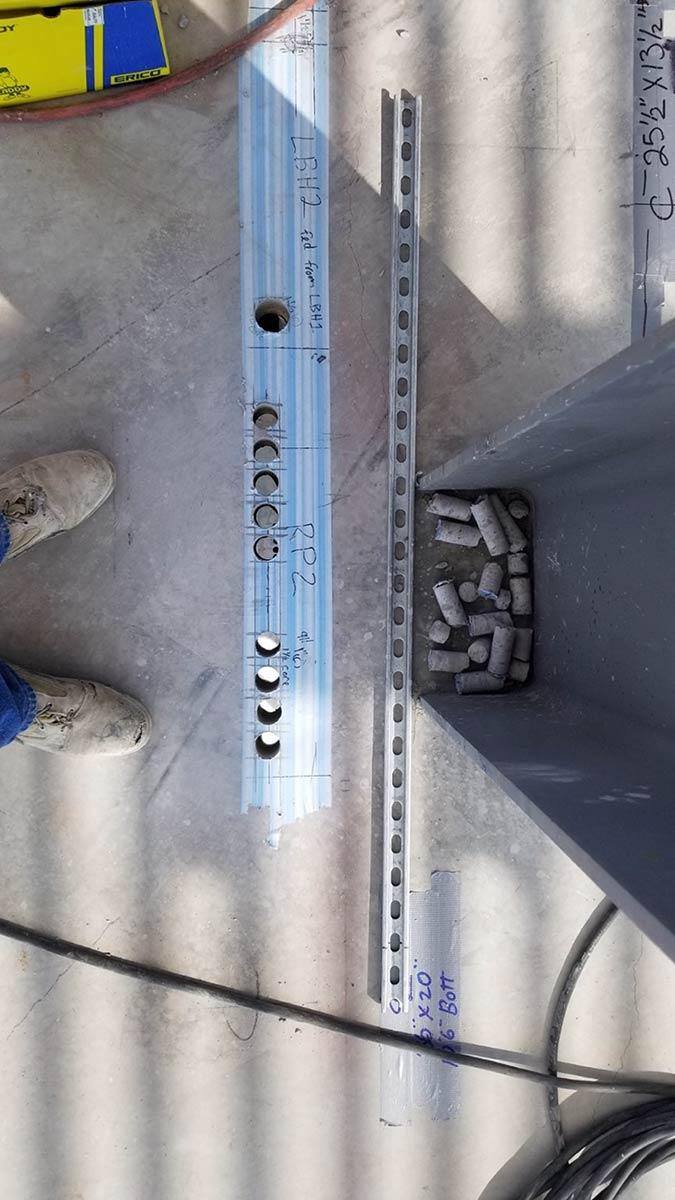
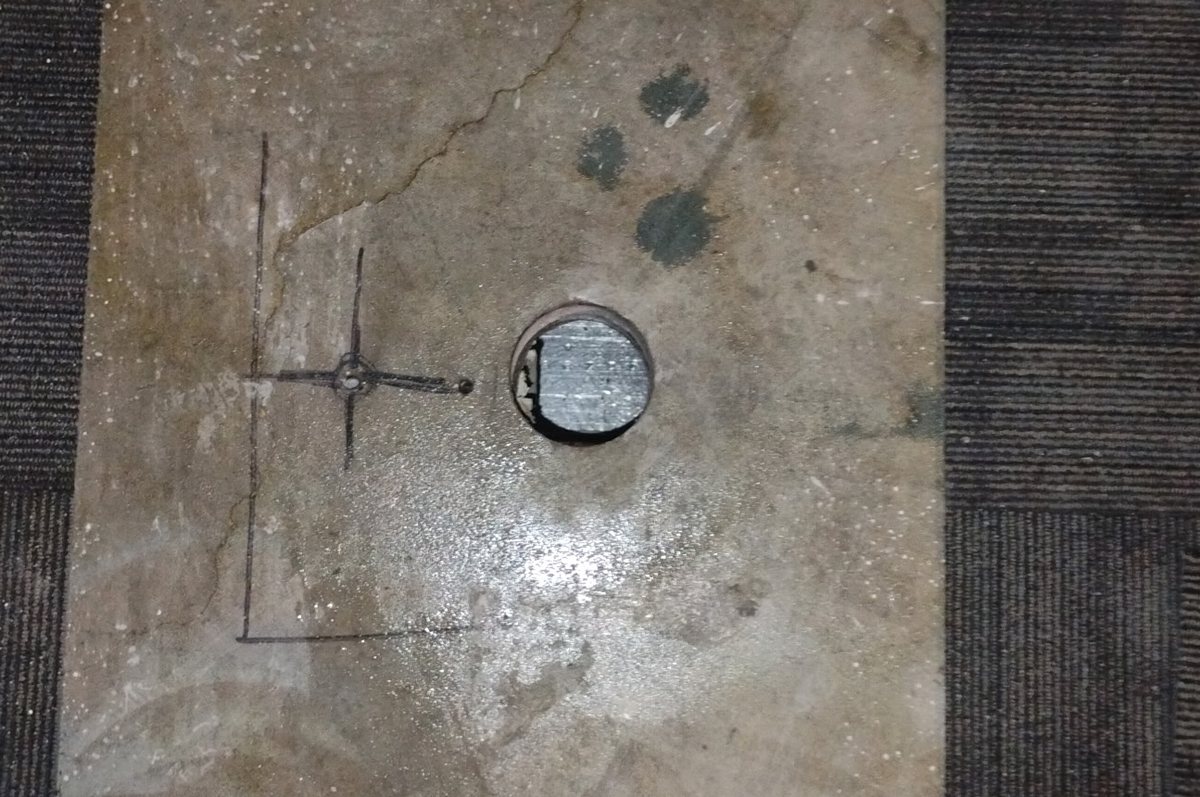
At U-Haul International on 24th Street in Phoenix we scanned the deck, marked it, and then drilled twenty 3-inch cores through concrete on pan deck ourselves — with a core catcher under every hole so nothing dropped to the floor below. When one company does the scanning and the cutting, nothing gets lost in the handoff between two crews. See that job →
Concrete scanning questions
What can GPR scanning actually find?
Rebar, post-tension cable, conduit, pipe, and voids in slabs, decks and walls. We mark what is there on the surface in the field so the crew can see the clear zones.
How deep does GPR see into concrete?
Well past the depth of a normal slab or deck. Depth of usable data falls off in very thick or heavily congested concrete, and if a scan will not give an honest answer we say so rather than guess.
Is scanning worth it on a small job?
One cut post-tension cable, one cut conduit, or one cut water line costs far more than the scan -- and a cut cable is a safety event, not just a repair. That is the whole calculation.
Do I get anything in writing?
Yes. When you need it documented we write a scan report -- depths, what was located and where, with photos -- and it comes to you separately from the field markings.
Can you scan without cutting anything?
Yes. Scanning is its own service. Plenty of our scanning is for other contractors who are doing their own cutting, or for engineers who just need to know what is in the slab.
Does the concrete have to be bare?
Mostly. Carpet, tile or a thick coating can be scanned through in some cases but it costs accuracy. Tell us what is on the surface and we will tell you honestly what we can deliver.
Asphalt, block, and concrete. We cut it all.
For your job, we will go anywhere. One number, answered 24/7, and a crew that has been cutting Arizona since 1961.
Call 602-268-1439